July Intown Atlanta Market Report
By Bill Adams, President
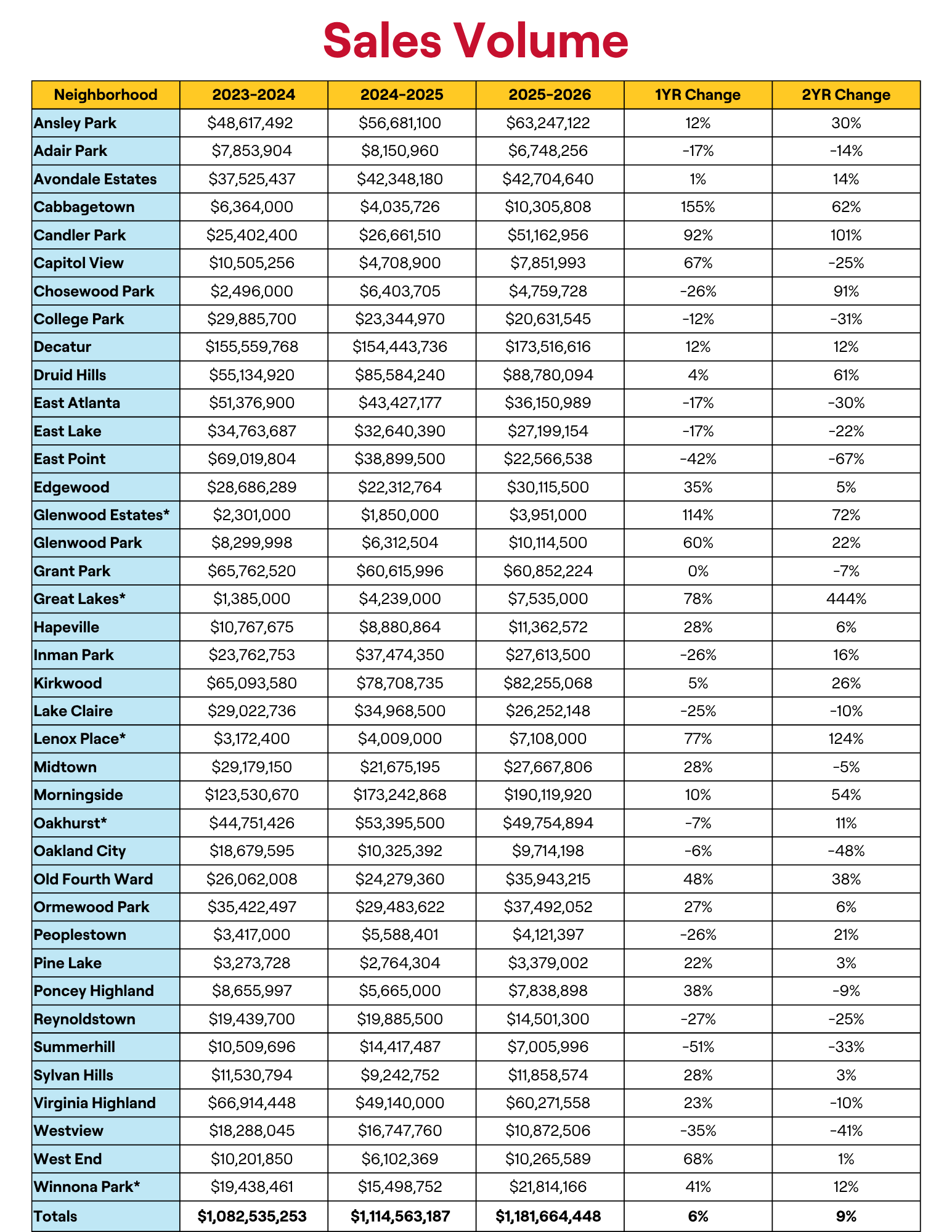
We are officially at the midpoint of 2026! The numbers in our July report cover the last six months of 2025 and the first half of 2026.
Overall Market Overview
While the overall single-family residential real estate market continues to indicate reasonable strength, performance across individual submarkets remains mixed:
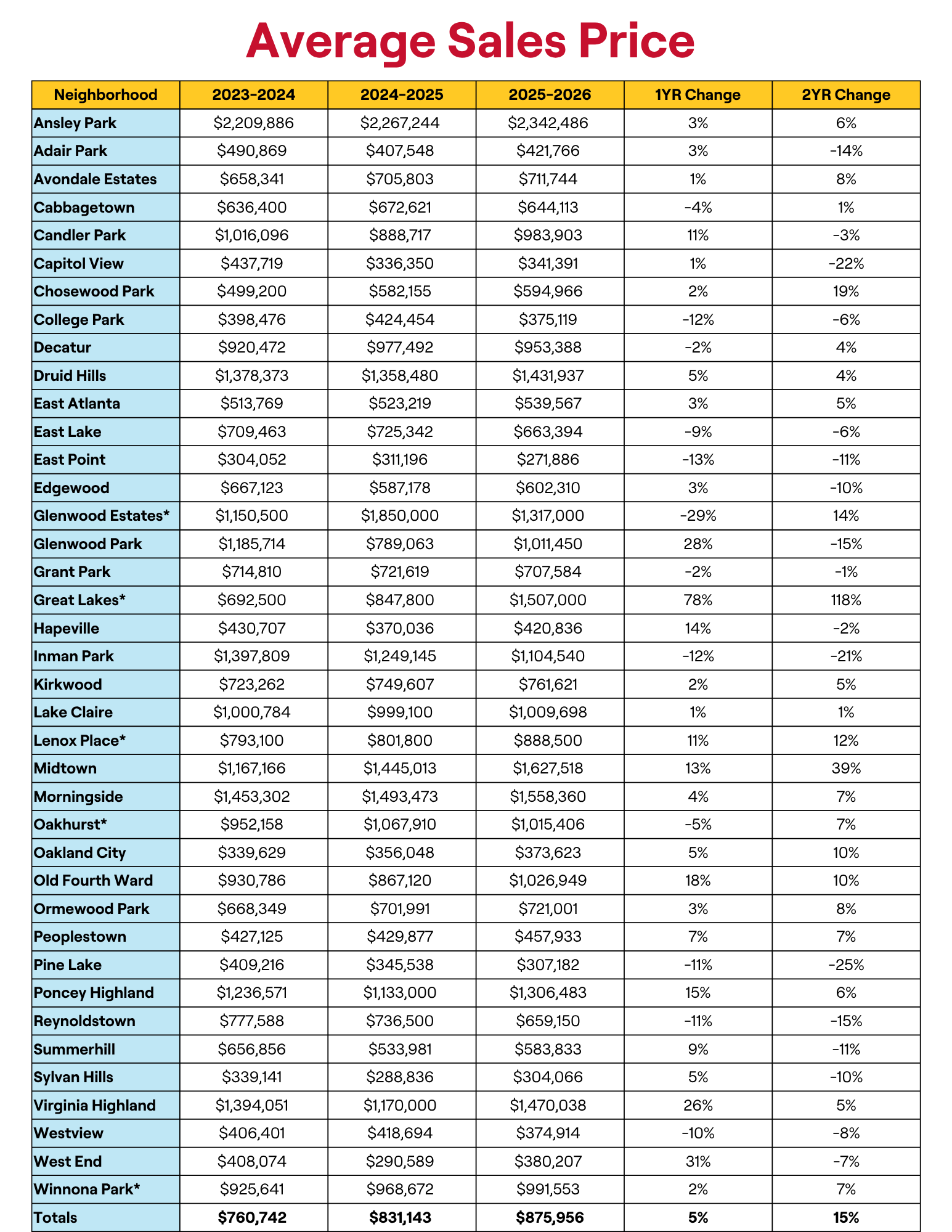
Average Sales Price (ASP): $875,956 (a 5% increase over the last 12 months)
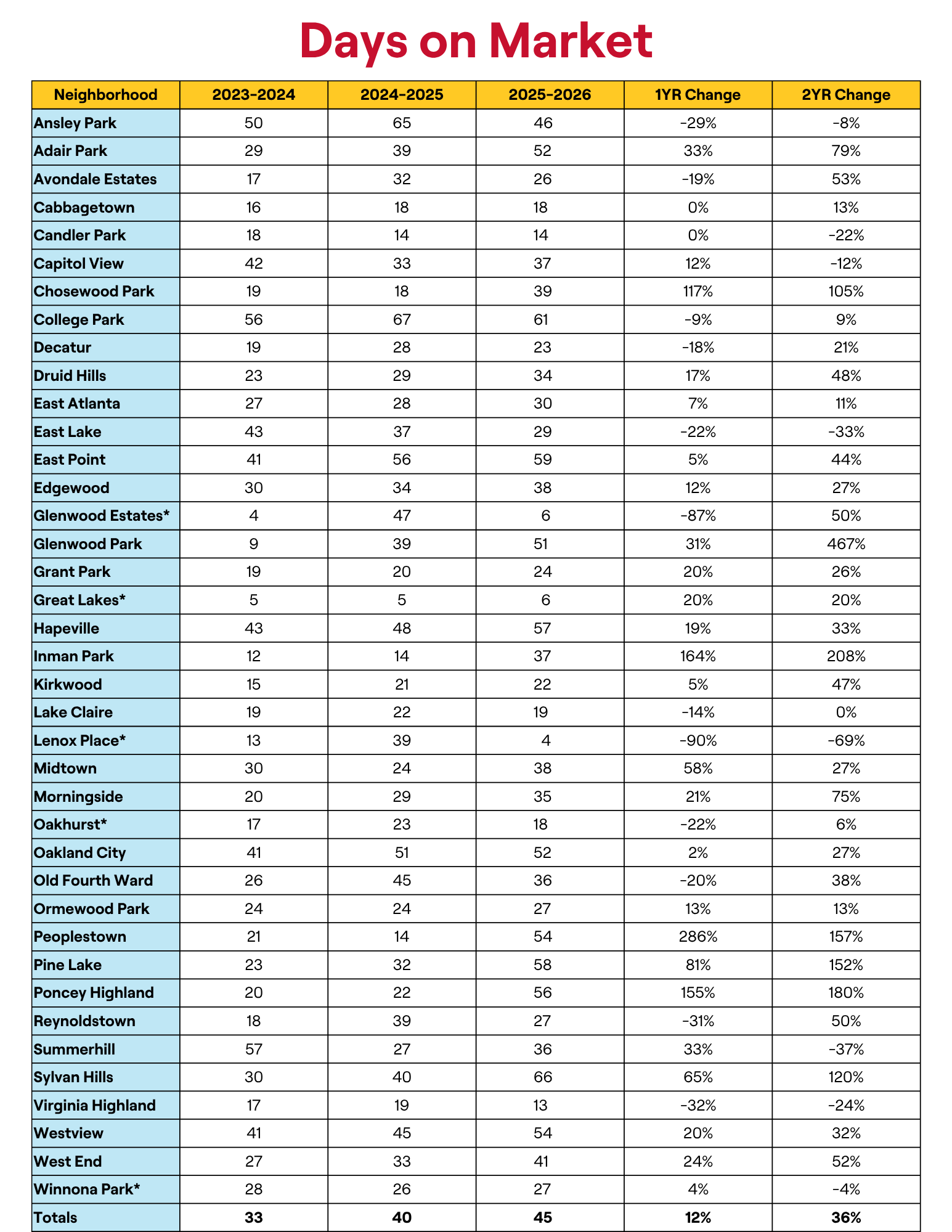
Average Days on Market (DOM): 45 days (an increase of 12% since July 2025)
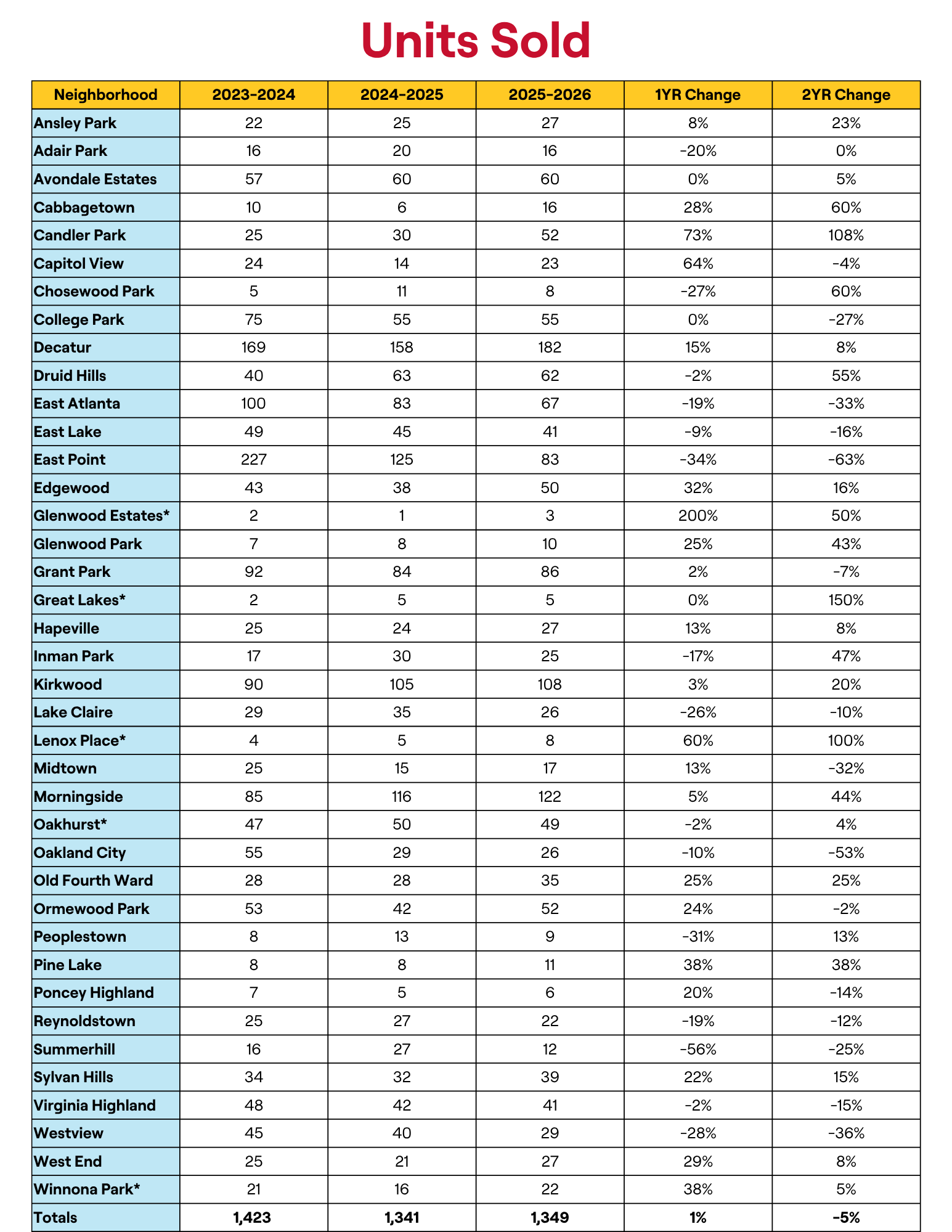
Number of Units Sold: 1,349 units over the last year (a 1% increase)
Market Divergence: 12 out of the 39 markets we survey experienced a decrease in Average Sales Price.
Spotlight: The Southeast BeltLine Corridor
This month, we are focusing on the markets along the Southeast segment of the Atlanta BeltLine. Within the last several months, the two sections that make up this segment have opened to the public. However, the prospect of the trail coming to the neighborhood has impacted each community differently throughout its history:
Grant Park & Ormewood Park: Early pioneers of the “Back to the City” movement beginning in the 1970s.
Cabbagetown & Reynoldstown: Began experiencing gentrification in the 1990s.
Glenwood Park: A master-planned development from the early 2000s.
Chosewood Park & Peoplestown: Began experiencing gentrification over the last ten years.
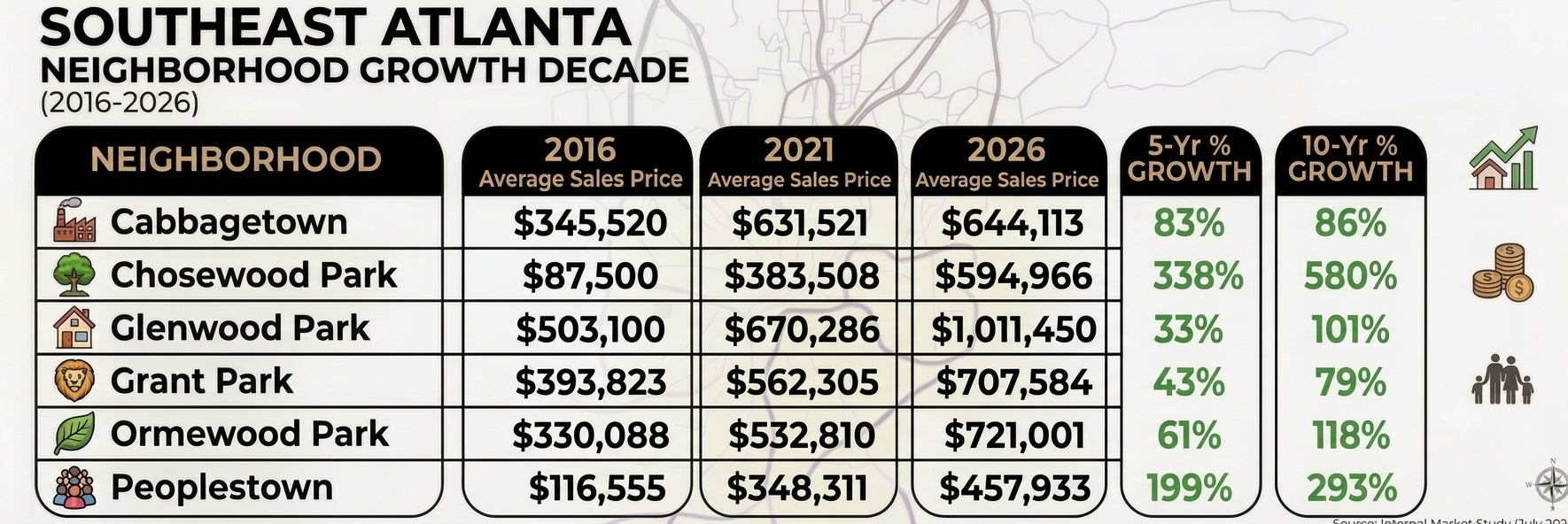
We believe the prospect of being directly on the BeltLine drove strong demand for homes in Chosewood Park and Peoplestown. Conversely, home prices in the other established neighborhoods were not as significantly affected purely by the prospect of the trail.
10-Year Price Trend: Southeast Atlanta Neighborhoods
Below is a breakdown tracking the Average Sales Price in Southeast Atlanta neighborhoods over the last decade, along with 5-year (2016–2021) and 10-year (2016–2026) appreciation rates:
Looking Ahead: What’s Next for Southeast Atlanta?
As we discussed last month, the new sections of the Southeast BeltLine form a “U” at the bottom of the loop, connecting the Westside Trail with the Eastside and Northeast Trails.
Direct Trail Access: This new connectivity will further increase demand for homes in these neighborhoods where demand is already strong. Consequently, we expect Average Sales Prices in these communities will continue to rise.
Surrounding Neighborhoods: Nearby Southeast Atlanta areas, within a mile or so of the trail, even if not directly on the BeltLine, will also experience heightened housing demand and higher prices.
Affordability Outlook: Moving forward, except for “infill” multifamily housing developments located within the Atlanta BeltLine Overlay District (which must comply with Inclusionary Zoning mandates) and multifamily projects utilizing Low Income Tax Credits, there will not be much affordable housing remaining in the Southeast quadrant of the City of Atlanta.